Multifamily Market Outlook 2026: Opportunity as Supply Peaks
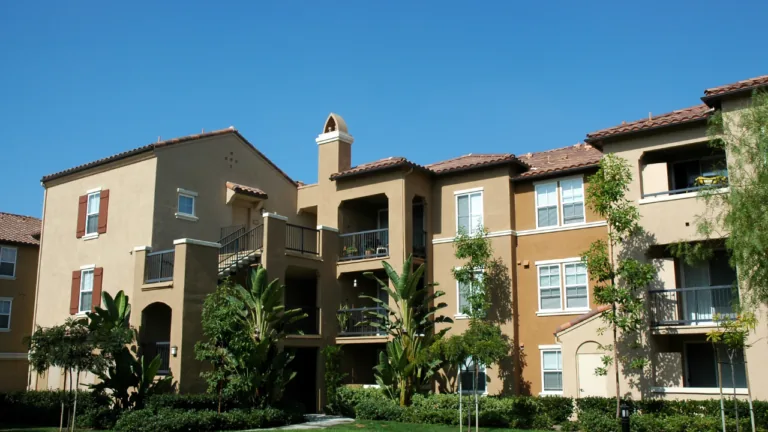
The multifamily market outlook for 2026 is gradual improvement, not a surge. New apartment deliveries are expected to fall sharply from their recent peak, vacancy should trend modestly lower from roughly 7% nationally, and rent growth should become more consistent across regions. Returns in 2026 will come from execution and local market selection, not from broad market momentum.
That is a different setup from the last few years, when inflation, rising interest rates, and an unprecedented wave of new supply dominated everything. 2025 did not deliver outsized growth, but it clarified where risk now sits and where opportunity is forming.
What happened in 2025: supply peaked and fundamentals held
National rent growth in 2025 averaged approximately 2% to 3%. That is modest by historical standards, but notable given how much new product was delivered. Vacancy rose to roughly 7% nationally late in the year, driven by the tail end of a construction cycle that added hundreds of thousands of units, concentrated in the Sun Belt and Mountain West.
Demand did its job. Employment growth, demographic tailwinds from Gen Z and Millennials, and continued barriers to homeownership supported absorption all year.
The more important development was on the supply side. Deliveries stayed high, but new construction starts and permits declined sharply. Higher borrowing costs, high construction expenses, and more conservative rent assumptions made fewer projects pencil, so the active pipeline has contracted significantly.
Capital markets also began to reopen. Transaction activity rebounded, with annual sales volumes projected in the $370 to $380 billion range. Cap rates stabilized, price discovery improved, and agency lenders kept providing liquidity while banks and CMBS lenders remained selective. Private capital (family offices, high-net-worth investors, and experienced operators) accounted for a large share of acquisitions while many institutions stayed cautious.
The 2026 multifamily forecast: gradual improvement, not a rebound
Most forecasts point to 2026 as a year of incremental recovery. Deliveries decline, competitive leasing pressure eases in most markets, and vacancy drifts lower. Rent growth should be steadier and more evenly spread across regions and asset types.
On financing, liquidity should increase gradually. Higher agency lending caps and the potential for lower interest rates later in the cycle may support refinancing and transaction volume, but underwriting discipline is likely to remain firm. We read this as the market moving from a supply-driven pause into a more balanced phase, which matches the recovery stage we described in our piece on how real estate cycles turn and what each phase signals for apartment investors. The rest of commercial real estate points the same way, as we covered in our look at the quiet momentum building behind CRE deals heading into 2026.
What the 2026 outlook means if you are deciding whether to invest
In a slower-growth environment, outcomes are decided at the asset and submarket level. If you are weighing a private multifamily allocation, the honest framing is this: 2026 is a good year to buy well and a poor year to buy anything.
Three things favor putting capital to work now. Cap rates have stabilized and price discovery has improved, so you are buying after the reset, not before it. The supply pipeline is shrinking, so the biggest headwind of the last two years fades over the hold period. And demand is durable, driven by demographics and the barriers to homeownership.
Three things would make it a bad idea. Buying in a submarket still digesting a large delivery wave, where rents may stay flat well into the recovery. Underwriting that depends on rate cuts or cap rate compression to hit its return, because neither is guaranteed. And investing with an operator who has not managed through a period where cash flow, not appreciation, carried the return.
What most 2026 multifamily forecasts miss
Most outlook pieces stop at the national averages. The number that matters to us is not 7% national vacancy; it is the vacancy at a specific property against its specific submarket, and why it is where it is. Our value-add thesis is that most underperformance traces to mismanagement, poor supervision, and high vacancy, and a year of high vacancy created more of those situations than usual.
That is why we look for existing Class C- to B+ communities built after 1975, with 50 or more units, priced between $4M and $50M. We want occupancy above 80% unless there is clear renovation upside. A property running below its submarket is usually an operations problem, which can be fixed. A property running in line with a weak submarket is a supply problem, which cannot be fixed on our timeline.
We also choose markets for demographic and economic growth and avoid oversupplied submarkets on purpose, which is why our 28 communities across seven-plus states sit in places like Dallas, San Antonio, Houston, Orlando, and Scottsdale rather than in the heaviest delivery zones. Across 4,252 units acquired we have averaged 95% occupancy, and across 13 deals taken full cycle we have created $106.3M in equity for investors. The 34% average investor return we advertise is historical, not a promise of what 2026 will deliver.
The practical difference in 2026: our business plans target up to 10% cash-on-cash from operations, not from an exit multiple. If rents grow 2% to 3% and the exit cap rate never moves, the plan still has to work. Quarterly distributions are evaluated about 45 days after each quarter closes and are never guaranteed. You can see how this shapes our sourcing on our investment strategy page, and the communities it has produced on our portfolio of 20 active and 8 realized communities.
The numbers to check and what to watch next
- Rent growth: 2025 averaged roughly 2% to 3% nationally. A market printing below that has a bigger supply overhang than the forecasts assume.
- Vacancy: about 7% nationally late in 2025. The forecast is a modest decline; a rise would mean absorption is weaker than expected.
- Starts and permits: they declined sharply in 2025. A fast recovery in starts would push the balanced-supply window further out.
- Transaction volume: projected at $370 to $380 billion for 2025. Rising volume with stable cap rates means price discovery is done.
- Lending: agency lenders stayed liquid while banks and CMBS were selective. Higher agency caps and broader bank appetite are the signals to track.
Also watch who is buying. Private capital led acquisitions in 2025 while institutions waited. When institutional capital re-enters at scale, pricing for well-located existing assets tightens, which is the case we made in our note on the signal the multifamily market is sending to investors who are still waiting. Demand is the backstop under all of it, a point we developed in our piece on why housing constraints keep pushing households toward apartments.
Questions investors ask about the 2026 multifamily outlook
Is 2026 a good time to invest in multifamily?
For existing, well-located assets in markets past their supply peak, we think so. Pricing has reset, the pipeline is shrinking, and demand is intact. It is a poor time for new development in oversupplied submarkets or for any plan that needs rate cuts to work. Returns are never guaranteed in any year.
Will rents grow in 2026?
Forecasts call for modest, more consistent rent growth as deliveries fall, closer to the 2% to 3% seen in 2025 than to a sharp acceleration. Markets still absorbing a large delivery wave will lag. Renewal pricing on stabilized properties is where growth shows up first.
What is the biggest risk to the 2026 multifamily outlook?
Buying the wrong submarket. National averages can improve while a specific metro is still in lease-up on a large delivery wave. The second risk is underwriting that leans on financing costs falling. If you want to talk through how a specific deal is structured, you can book a call with our team.
Related reading
- Housing constraints and the demand side of the multifamily equation, the structural reason absorption held through the supply wave.
- Why market cycles matter for multifamily investors, the framework for reading 2026 as a recovery phase rather than a new peak.
- The quiet momentum returning to commercial real estate deals, the broader capital markets context behind reopening liquidity.
Invest alongside us.
Talk with our team about the current offering, how distributions work, and whether a private multifamily allocation fits your plan.
Open to accredited and sophisticated investors. Investing involves risk, including loss of principal.